More On the Character of Gluten

Terrific response last week to my posts on the differences between American and Continental gluten. Lost of folks wrote in asking what some of the other implications are for transatlantic baking. I didn’t have time to answer everybody (indeed I didn’t know all the answers), but it occurred to me that muffins would make an excellent illustration of the principles at work. Except this time, instead of one more example where I have trouble adapting one of their recipes, I thought a little payba— er…reciprocity might be in order.

READ ON
What’s with the sour cream?

Reader Ellie remarks that the muffin recipe below does indeed look “basic” save for one thing: the sour cream. Is it really necessary? she asks. Won’t it make the batter acidic? First, Ellie, you have a heck of an eye for ingredient lists. Second, yes, exactly. Sour cream will make the batter acidic, but that’s by design. As I’ve written before, contrary to popular belief, acids and bases need not be perfectly balanced in a batter. Granted you want to beware of a very alkaline batter since bases can combine with fats to make soaps…which can really ruin your tea time.

READ ON

Basic Muffin Recipe

There are all kinds of muffin recipes out there, about as many as there are quick bread recipes (if not more). That’s what American muffins are of course, portion-sized quick breads. But more on that later. This recipe will work with lots of different inclusions…berries especially, but chocolate chips, nuts, all sorts of stuff. It’s a great launching pad for any of your own ideas.

10 ounces (2 cups) all-purpose flour
2 teaspoons baking powder
1/2 teaspoon salt
4 ounces (1/2 cup) butter, room temperature
5.25 ounces (3/4 cup) sugar
2 eggs, room temperature
4.25 ounces (1/2 cup) sour cream, room temperature
2 ounces (1/4 cup) milk, room temperature
about 2 cups of…whatever

READ ON

Random Notes on Basque Cuisine

My old Basque roommate didn’t like to talk very much, but when he was in the mood to speak he talked about two things: politics (most often) and food. Until I met him I’d never known a person who’d prefer to go hungry than eat food that didn’t meet his standards. I remember one evening he came in late from a study session having missed the evening meal. I suggested he go down to the dorm kitchen, grab a few slices of sandwich bread and a hunk off a big block of cheese that was in the refrigerator (I cooked there a few days a week). He paused, then turned and looked at me gravely. “That is not food, those are war rations,” he said, then turned away and went to bed.

READ ON

Lotta Yellow Cake Questions

Regarding yellow cake, reader Sandra submits a flurry of interesting questions:

What about the fat used? Oil or butter? Cake method or muffin method? In this times, when healthy rules, what do you think to use oil for a cake? In your opinion which are the main differences in the crumb using oil instead of butter? Baking powder appears at the end of 1800 right? Do you know how Careme use to do his fluffy cakes for Maria Antoniette?

Hey Sandra! Butter is undoubtedly the preferred fat for an American-style layer cake. The flavor of butter is, at least to my way of seeing things, a crucial component of the overall flavor profile. That’s not to say that layer cakes can’t be made with oil. Oil cakes are generally quite moist and tender because the fat remains liquid even after the cake has cooled. However they can be tender to the point of being wet inside depending on how much oil is used. They can also weep oil, which I find rather unappealing. In general I’m not a fan of oil cakes, though I confess I have a soft spot for Italian olive oil cakes, which have a very unusual flavor.

READ ON

Making Gâteau Basque


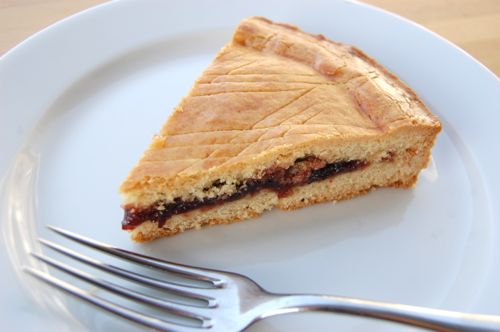
Gâteau Basque is probably the ultimate afternoon cup-of-coffee-and-a-good-book pastry. It’s definitely got a less-is-more thing going on. Sweet and crumbly, it’s the kind of cake you can nurse along for half the afternoon, savoring the vanilla, brown sugar, and black cherry filling. Despite all the steps you’re about it to see here, there’s no magic to the process. You can pull one together with very little work or worry. Start with the dough. Whisk the dry ingredients together in a medium bowl.

READ ON

How Old is Gâteau Basque?

Very hard to say, reader Don. Obviously this version has baking powder in it, which would make it a relatively recent invention. Yet somehow I have a feeling that chemical leavening only came to gâteau Basque this past century. Unleavened, yet still sweetened and enriched versions probably go back a few hundred years, and unsweetened […]

READ ON

On Yellow Cake Layers

Reader Rosemarie writes in with an interesting question:

Of all the cakes, including Sponge, Chiffon, Genoise… which type do you think is the CLOSEST in light consistency and texture to a boxed yellow cake mix for a layer cake? I tried a Sponge, which although spongy, the air holes are bigger and the crumb is more coarse. My jelly roll is most like it but I can tell that it wouldn’t have the strength to bear up under frosting and other layers. I think it has to have some fat content.

READ ON