Filo Recipe

The only special gear you need for filo — other than a large table or counter to roll on — is a thick dowel rod or a broom handle to use as a rolling pin. What, you’ve never rolled dough with a broom handle before? Well there’s never been a better time to learn!

1 lb. 4 ounces (4 cups) all-purpose flour
1 teaspoon salt
11 ounces (1 1/3 cups) warm water
2 ounces (1/4) cup olive oil
cornstarch (corn flour) for rolling
READ ON

What is Galaktoboureko?

“Delicious” is the answer. It’s basically a custard pie — the name means “milk pie” — baked in a deep dish, surrounded by filo and soaked with a citrus-scented syrup. Hang on, Joe, that sounds vaguely familiar. Indeed it does, especially if you’re a baklava fan.

But I thought baklava was Middle Eastern or Turkish in origin, isn’t this Greek? Yes and yes, however galaktoboureko represents a melding of those traditions. Greeks have long been makers of pies and custards. It seems that something not entirely dissimilar to a quiche existed in Greece in antiquity.

READ ON

Next Up: Galaktoboureko

Gesundheit. This is a Greek classic that’s not very well known here in the States. However I’ve got it on good authority that it’s a must for every Greek home baker’s repertoire. It’s a fairly simple device, however as a bonus I think I’ll attempt homemade filo, too. Should be good for a little entertainment, no? At least it will when I get back, as I have to travel the next couple of days. More Friday I hope!

READ ON

Gear Essentials: Building/Finishing

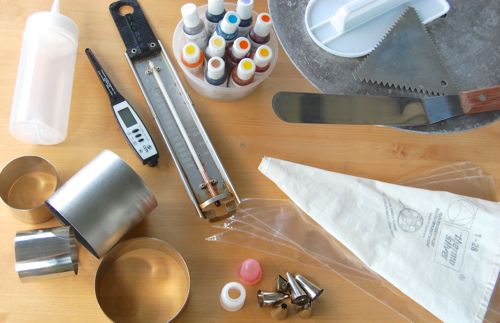
One thing I’m not is a talented decorator/finisher. However I know enough about finishing to know that you can achieve some remarkable things with a little gumption and a handful of tools. Here’s what my finishing arsenal looks like, all this photo is missing is my blowtorch, the pieces of which I hid so well from my kids that now I can’t find them. Oh well, life must go on.

READ ON

Gear Inessentials: Baking

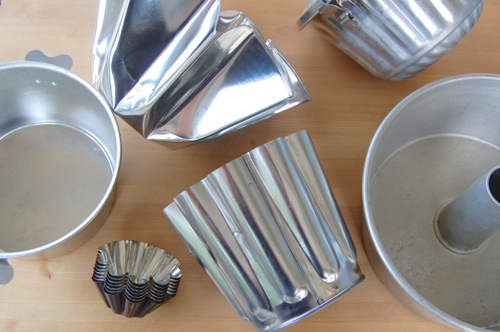
The world of forms is a wide one. Here’s a small selection of specialties. They’re the sorts of forms you might use only once in a while, but when you want ’em you want ’em. A pudding mold (upper right) is key if you’re British, of course. Tube pans of various kinds are important for angel food or bundt-type cakes (tube pans are a world unto themselves, actually). Brioche pans are more for look than function, and as for the charlotte pan, I just happen to love charlottes, is all. I also use that thing for soufflés when I’m feeling pretentious (often).

READ ON

Gear Essentials: Baking (Part 2)

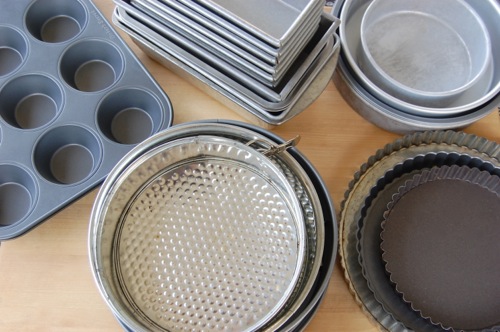
If you’re going to bake with forms — and there’s no saying you have to do that — there are basically six categories the average home baker needs: loaf pans, cake pans, tart pans, springform pans, pie pans and muffin pans. I keep several sizes of each, and I vastly prefer shiny finishes over dark nonstick, though sometimes you need a pan and can’t find anything else.

READ ON

Gear Essentials: Baking (Part 1)

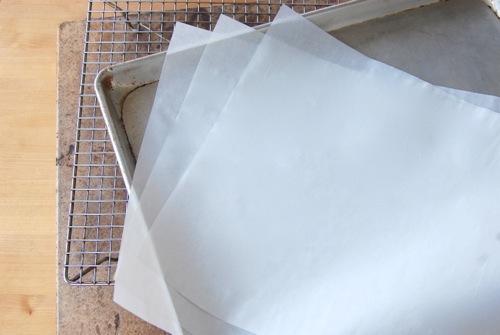
I’m going minimal here because I wish to underscore how powerful this simple gear array is when used in combination with an oven. An oven stone, a few sheet pans (“half sheets” technically), cooling racks and some parchment paper will deliver a truly stunning amount of delicious bakery: breads, rolls, sponge cakes, galettes, cookies, bars, free-form pies and tarts…I could go on and on.

READ ON

Gear Essentials: Shaping

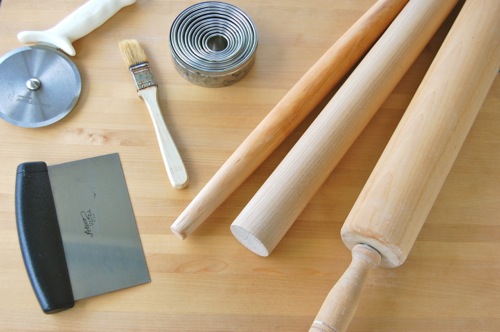
The “shaping” step, for some kinds of pastry, can be extremely involved. However you can do a heck of a lot with just the implements you see here (starting with the background of this and every Joe Pastry photo: a nice, solid maple board). The bench scraper on the bottom left is something most home bakers don’t own, but is invaluable for scraping up sticky bread doughs, portioning dough for rolls, cutting the ends off jelly rolls, the list goes on.

READ ON

Gear Essentials: Rising

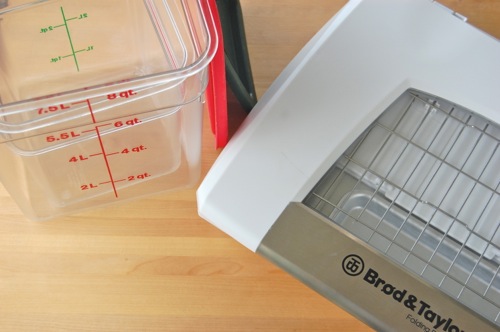
Not terribly much here, and I’d never call a $150 folding proofer an “essential.” I just like it, is all, both for rising and proofing (proofing being the second rise just before baking). For rising you really don’t need anything more than a large bowl or pot and a cloth to cover. However proofing containers like those on the left there are quite helpful. The hash marks on the sides let you gauge how fast your dough is rising and to what volume. They have many other uses in the kitchen as well, like measuring large quantities of fruit or brining chickens. Trust me, you need some.

READ ON