Making Mandarin Pancakes
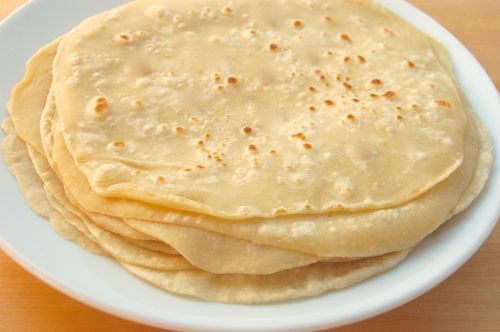
The only application I know for Mandarin pancakes is as a holder for moo shu pork. I know there much be others, but in my universe that’s more than enough. What’s fascinating about these pancakes is that they’re extremely thin and flexible while containing no egg or fat. Just white flour and hot water. It’s the boiling water that’s the key, it quickly creates a starch “gel” that keeps the pancakes supple. Begin by combining the water and flour in a medium bowl or a mixer.

READ ON
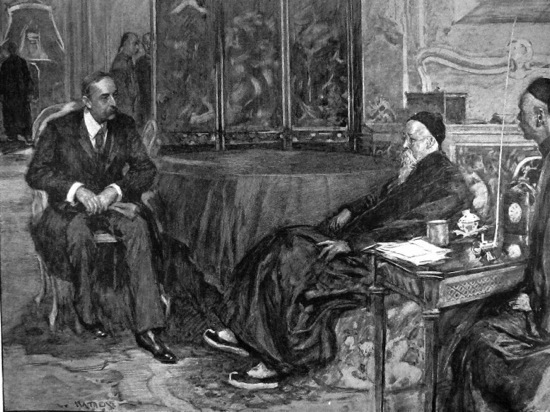
Where does moo shu pork come from?

When you consider that chop suey peaked as a phenomenon in the 20’s, Chinese cuisine — at least of the Cantonese variety — experienced a long period of stagnation before new and improved versions came along. There were several attempts to update the formula of course. Chinese restaurant/jazz joints were popular in the 20’s and 30’s. Following World War II Chinese restaurant/tiki bars were huge, and they endured well into the 60’s. Actually I know of at least one of those that’s still around: Chef Shangri-La on 26th Street in Riverside, Illinois. My college buddies and I tossed back a few Dr. Fongs at that place back in the late 80’s I can tell you. Oh the hangovers. But the grass roof in the bar was very cool as I recall. My memory might be a little skewed.

READ ON

Are you SURE chop suey is Chinese?

Because I’ve always heard the dish was a hoax perpetrated on gullible Americans, writes reader Margie. Margie, you are definitely not the only one who’s heard the same thing. In fact this particular rumor about chop suey has a pedigree nearly as distinguished as chop suey itself.

It dates back to 1904 in fact. That was the year that a Chinese cook by the name of Lem Sen hired a New York attorney to help him prosecute all the many thousands of Chinese restauranteurs in America who, he claimed, had stolen his recipe. So he said chop suey was a dish he’d invented in his restaurant in San Francisco, only few months before Li Hung Chang’s momentous visit to the US. It was an ersatz Chinese concoction made up to please American patrons.

READ ON

I’ll Have the Stew

Reader Dana asks:

This may be off-topic…I’m pretty sure it is…but can you tell us when chop suey went from being something authentically Chinese to the culinary travesty that it is now? Enquiring minds want to know!

Not at all, Dana…in fact quite on-topic since American Chinese food is what’s on the agenda this week. From what I know it wasn’t long. In the fifteen years following Li Hung Chang’s visit, Chinese restaurants spread like wildfire across America. Most of them had greatly abbreviated menus, serving popular dishes like chop suey, chow mein and egg foo young.

READ ON

I’m OK. You…not so much.

Reader Emily writes:

You mentioned that at the time of Li Hung Chang’s visit relations were strained between America and China. Why was that?

Emily, my grasp of Chinese history is shaky at best, but here goes. Speaking in the broadest possible terms, matters of race and immigration were behind the problems. In 1882 Congress passed a notorious bill known as the Chinese Exclusion Act, basically ending mass immigration from China. Why? As I wrote earlier the Gold Rush was long since over by then. Competition for jobs — especially mining jobs —increased and anti-Chinese sentiment was high. The Chinese Exclusion Act was designed to prevent Chinese mine workers from entering the US for a period of ten years, but was renewed again ten years later in 1892.

READ ON

A Chinese Cultural Revolution

Something I neglected to mention earlier in the week is that while Chinese nationals were pouring into America by the tens of thousands through the West, a small but steady stream was coming in via the port of New York. By the 1870’s a Chinese community had established itself on the Lower East Side of Manhattan in the vicinity of Mott street. There they set up a variety of import shops supplemented by — you saw it coming — restaurants.

READ ON

Mandarin Pancakes Recipe

Good Mandarin pancakes are very, very thin. Much more so than flour tortillas which are frequently substituted for them. Sigh. The rolling method is ingenious. You basically roll two at a time, back-to-back, then peel them apart. So simple it’s beautiful, no? You’ll need:

10 ounces (2 cups) all-purpose flour
6 ounces (3/4 cup) boiling water
Sesame oil for brushing

READ ON

On Food Taboos

So why is it that Westerners were so hesitant to try Chinese food for so long? It’s the same reason that some Westerners remain suspicious of Chinese food to this day: because of what they fear might be in it. Since the very earliest days of the Chinese-European relationship, it was well known that some animals that Europeans considered off-limits as foodstuffs were common sources of protein in parts of China.

READ ON

American as Chinese Apple Pie

By 1860 the gold had pretty much run out. However by then tens of thousands of Chinese workers had emigrated to the U.S., mostly from the Pearl River Delta in the southern Guangdong province. The Chinese quarter of San Francisco had dozens of general stores selling all manner of merchandise shipped in from China. Some one thousand Pearl River fishermen were working San Francisco Bay, and Chinese farmers were mastering the art of vegetable growing in dry California soil.

READ ON