Making Apple Strudel
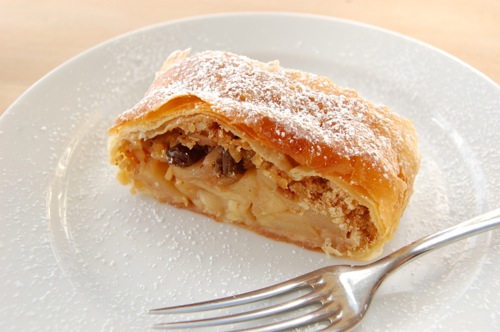
There’s a reason strudel has been consistently popular all over continental Europe for more than three hundred years: it’s pure, delicious comfort. It’s also fun to make, even when you count in the intimidation factor. The fear keeps you focused like a laser, and makes the exhilaration of baking up your completed roll tat much sweeter. Even more so than with a “fancy pastry”, you walk away from the strudel baking experience with a swagger. Oh yeah — baker in the house!

READ ON
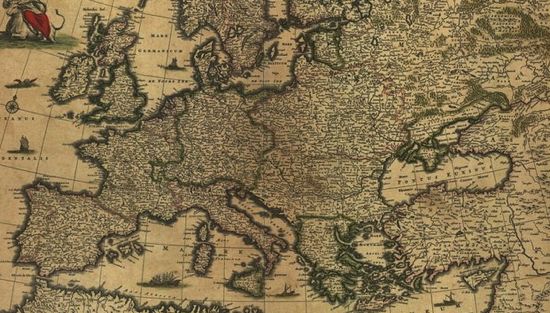

The Melting Thing

Reader Jo (like that name, Jo!) asks:

So if I understand you correctly from your post on baking tart apples, it’s the inside-out ripening process that causes apples to get mushy as they bake. Is this the reason why some apples seem to “melt” when you sauté them?

It is! The outside of the slices are the softest, so that portion of the apple dissolves fairly quickly leaving the firmer middle. Thanks for the great question, Jo!

READ ON

When did strudel arrive in America?

I was getting to that, reader Nicole! There’s no way to know for sure, so I’ll play it safe and say sometime in the middle 1800’s. That’s about the time that the very large waves of immigrants from central Europe started arriving in the US. One of the earliest known instances of a strudel recipe printed in the States was an 1889 Jewish-American classic called Aunt Babette’s Cook Book. It contained an entire section on strudels, including many of those cited below plus one for calves’ liver and lung. Don’t knock it ’til you try it, folks!

READ ON

Strudel Moves North

I mentioned below that Hungary remained a battlefield for decades after 1526, as Ottoman and Habsburg forces swept back and forth over the region fighting for control. The logical question is: when did it all end? When did strudel finally make the leap northward?

Those of you who’ve read the blog for a while may know that the turning of the tide for the Turks occurred in 1683, at the most baking-intensive conflict in the history of man, the Battle of Vienna. From that point onward the Ottoman Empire was either in retreat or stagnating (though it’s important to remember that it endured in some form for almost another 250 years, until just after World War I).

READ ON

“It was worse at Mohács.”

So how then did the strudel and/or filo dough handoff happen between southern and northern Europe? As I mentioned below, the southern (Balkan) portion was under the control of Empire A, the Ottomans, while the northern portion was under the control of Empire B, the Austro-Hungarians. To say the two didn’t care much for each other is putting it mildly. They were bitter enemies. A not implausible explanation is that the transfer took place via the region now known as Hungary.

To explain why we need to flash back a little further in history to a time when Hungary itself was a mighty empire, way back in the Middle Ages when a federation of Magyar tribes controlled pretty much everything from what is now the Czech Republic and southern Poland all the way down through the Balkans to the borders of Greece and Turkey. Those were the glory days of Hungary, and they lasted from about 900 A.D to about 1500 A.D..

READ ON

Where does strudel come from?

Turkey. Oh sure, we Americans think of it as a German thing. Some of us might be a bit more precise and call it Austrian instead. The reason for that is because the best known strudel in America is apple strudel, and that’s something of a Central European specialty.

Venture outside German-speaking Europe however and you find strudels of many other types. Looking south and east, the Hungarians have them, so do the Slovenians, Croats, Serbs, Albanians, Bulgarians, the list goes on. What do all these locales have in common? They were once (in whole or in part) provinces of the Ottoman Empire, the seat of which was a little further south and east, in Istanbul (not Constantinople), Turkey.

READ ON

Apple Strudel Recipe

There are as many apfelstrudel recipes as there are grannies in Austria, Germany and the Balkans. This one is representative of the tradition, but feel free to improvise a bit if you so desire.

For the Filling

This filling is best made the day before your strudel so you have it on-hand once the dough is stretched and waiting.

5 pounds apples, gala or golden delicious, peeled, halved, cored and sliced into wedges
2 ounces (4 tablespoons) lemon juice
2 ounces (2/3 cup) raisins or black currants
4 tablespoons rum (optional)
3 ounces (6 tablespoons) butter
5.25 ounces (3/4 cup) granulated sugar
1 teaspoon ground cinnamon
2 teaspoons lemon zest
2 ounces (generous 1/2 cup) chopped, toasted almonds or walnuts

READ ON

Next Up: Apple Strudel

I’ve brushed this classic aside for too many autumns. This year I resolved to get after it early, and so I shall. Now is the time to strike since I’ve been so heavily into ultra-thin doughs this year. Austria, here we come!

READ ON

Bourbon Fancy

Get much into the South and you find that many city folk, even those of quite modest means, own their own formalwear. Having a tux in the closet (even a cheap one like mine) can be important in a place like Louisville. It’s evidence that, unwashed heathen that you are, you can still don the armor of the civilized and go get polluted in style.

READ ON