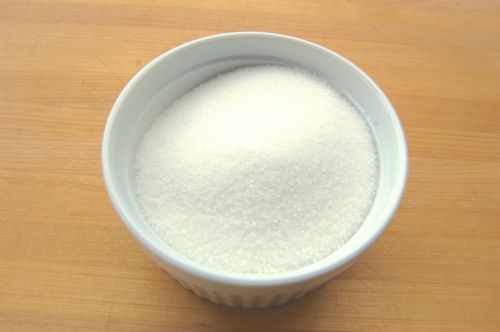
Table Sugar

What can I say? It’s the standard in much of the world. A medium-small crystal size (about 0.5 millimeters), this sugar is made from very pure (over 99%) sucrose so as to be free of non-sucrose flavors or colors. White table sugar can be made from sugarcane or beets, with cane sugar being preferred for baking and especially candy making. Vegan versions are made the same way as standard, save for the fact that they aren’t passed through charcoal filters, which contain bone meal. See below for more about how standard table sugar is made.

READ ON
What’s that smell?

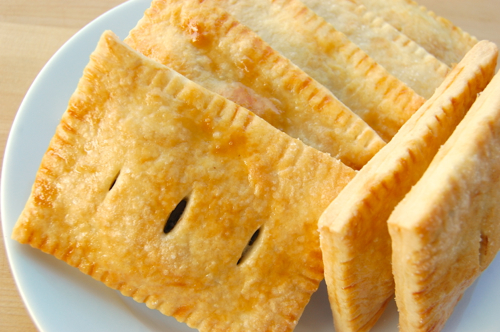
Reader Jimma brought up a good point yesterday: beet sugar can — or once did — have a distinctive smell. Indeed once upon a time beet sugar makers had trouble refining their product to the same degree that cane makers did. This was for a couple of reasons. First, beets grow in soil, so residual soil, molds and bacteria can get into the batch if they’re not thoroughly washed off. Second, beets contain toxic compounds called saponins that they use for defense. As the name implies, these chemicals are related to soaps, which means that they not only have a funky flavor, they can create foam or scum in syrups.

READ ON

How Sugar is Made

How “Raw” Sugar is Made

I find “raw” to be a pretty weird term for sugar, since all table sugars are “cooked” in a sense — boiled or heated to evaporate moisture. After that it’s mostly a matter of removing the “non-sugar” substances. But as usual I’m ahead of myself.

Sugar processing, as I mentioned below, starts by harvesting, washing and pulping the sugarcane. At that point the cane is pressed to remove the sucrose-heavy juice. The next step is to heat the juice to remove the moisture. Traditionally this was done by boiling, but since long-term boiling is both fuel-intensive and can destroy some of the flavors in the by-products (i.e. the molasses), most cane juice these days is “cooked” in vacuum pans which get the job done at a lower temperature. After many hours the juice turns thick and brown as the residual plant bits brown and some of the non-sucrose sugars caramelize. The finished product is a thick, very low moisture liquid called “dark brown” syrup.

READ ON

Sugar from Beets

A big technological advance in sugar making came along in 1747, when German chemist Andreas Sigismund Marggraf discovered a method for extracting sucrose from beets. That was a good thing for several reasons, chief among them that beets grow in a temperate climate, so sugar could be made close to home. Also, the sugar in beets doesn’t ferment as quickly as sugar in cane, so harvested beets can be stored for long periods before processing. Even so it took a while for his innovation to catch on. A big reason, because agronomists needed to breed beets with enough sucrose in them to make the process economically viable. That finally happened around 1800.

READ ON

Rise of the European Sweet Tooth

Muslim Arabs dominated the sugar industry for roughly 700 years. As their Caliphate expanded, so did the geographical range of their favorite grass. Muslims planted sugarcane on the shores of the Caspian Sea, in the Tigris-Euphrates Delta, in Palestine, the Nile Delta, on the islands of Cyprus, Crete and Sicily, and in southern Spain. Anywhere, in short, where they could supply it with the water it needed to thrive. For indeed sugarcane is an extremely thirsty plant. Arabs may thrive in the desert, but sugar, being tropical, needs water, water, water.

This map does a good job of showing the distribution of sugarcane during the period. Notice anything about the locations of these growing regions? None of them were in Christian-controlled Europe. That left sweet-lovers in the northern hemisphere mostly out in the cold, as it were. For European Christians and Muslim Arabs didn’t get along terribly well in those days. Which meant that when Europeans wanted sugar, they had to contend with bees.

READ ON

Straight Up Sugar

So what is sugar and where does it come from? That’s a good place to begin, I think. The answer is that — at least classically — sugar is the distilled, evaporated and crystallized juice of sugarcane, a giant grass that’s native to India. There it’s thought sugarcane was cultivated starting in about 3,000 B.C..

READ ON

This Week is Sugar Week

Reader Rick had an interesting idea last week: what if I put up a separate section on sugar to mirror the Flour section I have under “Baking Basics” to the left there. It might make a handy reference for bakers out there, plus I’d get to geek out on the subject sugar refining. Everybody wins! […]

READ ON

Geronimo!

On a non-pastry note, I hope you got a chance to check out Fearless Felix Baumgartner’s record-breaking 24-mile skydive yesterday. If you missed it you can watch it here. It’s amazing. Of course fifty years from now naked, drunken college kids will be doing this every weekend from the front porches of their orbiting, solar-powered fraternity houses…but for now it’s pretty darn impressive.

READ ON

Making Pop Tarts

The genius of Pop Tarts is that Kellogg’s took a tried-and-true favorite — the jam tarts pie-baking mothers made for kids out of pie dough scraps — dressed them up with a new name, some new flavors and…presto: a big fat packed goods hit. The homemade version is better. All you need are some basic ingredients and the filling of your choice. Start by stirring the dry ingredients together in the bowl of a mixer fitted with a paddle. You can do this by hand if you like, also.

READ ON

Tough Stuff

Reader K-Line wants to know…

…if the crust, in order to withstand the toasting experience, needs to be durable at the expense of soft and buttery.

Great question, K! The answer is yes, to some extent. Pies baked up in plates can have incredibly tender crusts. However hand pies are meant to be, well…handled. Thus their crusts need to be a little tougher than a normal. Different bakers achieve this end in different ways. Some add more liquid to the dough to increase gluten development (thus making the crust harder and chewier) while others subtract fat to decrease the crumble factor.

READ ON