Yorkshire Pudding Recipe

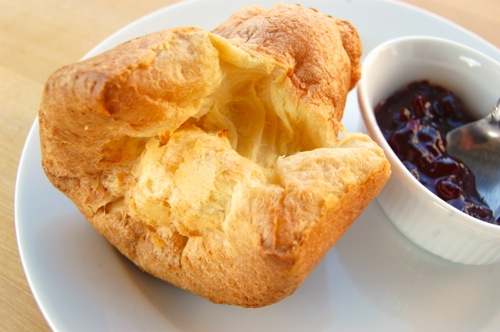
If it looks familiar it’s because it’s almost identical to popovers, though just a tad richer. The main difference with Yorkshire pudding is that — classically — it’s baked in one large pan instead of individual servings (like American popovers). That pan needs to be heated and have at least a few tablespoons of smoking-hot meat drippings in it.

Just as with popovers, a successful Yorkshire pudding depends on well developed gluten, which is why I suggest using a blender, food processor or lots and lots of whisking is you want a decent puff. Assemble:

1 ounce (2 tablespoons) melted, unsalted butter
5 ounces (1 cup) all-purpose flour
3/4 teaspoon salt
2 eggs, room temperature
8 ounces (1 cup) milk, room temperature
1 ounce (2 tablespoons) melted fat from a roast, or lard or butter

READ ON

Joe on Catholic Catechism

Reader Mikey has an amusing question:

Hi Joe! Loved your St. Lucy posts, and I hope you won’t be offended, but being a Catholic I wonder if you can answer something for me. Do Catholics really worship saints as, well, gods?

Ha! I love that. First let me say that the first commandment states that “You shall have no other gods before me.” The before me implies that the odd kitchen or tool shed god is permissible so long as you don’t forget who number one is!

READ ON

Making Popovers

Now me, I’ll eat a popover all by itself with jam, pork roast be damned. However there’s no denying how good they are as an accompaniment to meat. Plus they’re so fast and easy to make you can turn out a batch while your roast is settling on the counter. There’s a myth that popovers are tricky things. But that isn’t so, provided you’re clued in to the importance of developed gluten in the batter and can wield a blender, food processor or whisk with authority.

READ ON

Popover Recipe

Popover recipes tend to be very consistent in their proportions since the science that underlies them is constant. Herbs and other flavorings are an exception to that rule, and are popular with American cooks (traditional Yorkshire pudding has no herbs). Popover recipes can, however, differ in technique. I’m stymied by recipes that tell the cook to whisk the batter gently or until “just combined.” That’s a rule for pancake or crêpe batter — which popover batter closely resembles — or for quick breads or cakes, where you don’t want much gluten development.

It’s the opposite with popovers. In this case you want lots of developed gluten to give the rising bread the elasticity it needs to stretch and hold steam. For that reason I recommend a blender or a food processor. If you have neither of those and rely on a whisk, use plenty of elbow grease, and consider using bread flour (or a mix of half bread and half all-purpose) to amp up the gluten content. By no means use pastry flour, cake flour or a fine Southern flour, which won’t do the job here. Either go Yankee or make dinner rolls instead. The ingredients are:

1/2 ounce (1 tablespoon) melted, unsalted butter
5 ounces (1 cup) all-purpose flour
3/4 teaspoon salt
2 eggs, room temperature
8 ounces (1 cup) milk, room temperature

READ ON

Are popovers and choux the same thing?

VERY good question, reader Ashley. There are certain similarities but in the end they are quite different things. Choux batter is a more complex combination of pre-cooked (gelatinized) starch lubricated by fat (egg yolks). What you get is an ultra-elastic paste that can increase in volume by up to 600%. By contrast you’re lucky if your popover batter increases threefold. It’s a darn impressive feat still and all.

READ ON

What is a Popover?

A small Yorkshire pudding is the answer. Basically a very puffy, nearly hollow muffin. That’s the ideal at any rate, since popovers have a notoriously high failure rate, and all too often resemble actual muffins for their compact size and density. They don’t “pop over” in other words…overflow the bounds of the small cups they’re baked in.

Interestingly, they originate from a thin batter, a batter that is very similar to pancake batter though it’s treated a bit differently. For one it’s agitated a whole lot — popover batter is usually whipped up in a blender or a food processor. That’s a major no-no in the world of pancakes, as lots of working it makes a griddles cake tough.

READ ON

Where you been, Joe?

Well I’ll tell you. It all started nearly a year ago, when I made a donation to our local parish. They have a casino night each January to raise funds for school programming. Part of the event is a silent auction, for which parishioners donate prizes ranging from artwork to electronics. I’d just finished doing gingerbread houses for the blog so I figured: why not? “Your house rendered in gingerbread” for a recommended donation of $75.

I figured I was pretty safe from a major time commitment since most of the houses around here are simple, turn-of-the-century Kentucky bungalows or boxy Victorians. What I neglected to consider was one corner of the neighborhood that’s peppered with 50’s-era chalets. Wouldn’t you just know that the family who won the house would live in one of them…a high-peak three-bedroom with four dormers, two additions off the rear and a tricky set-back front porch containing several arches.

READ ON

Big Numbers

I’ve been answering so many baking questions lately, I finally decided to go have look at my analytics to see what was up. What I saw there floored me…more than three thousand of you good folks are stopping by to see me on the average day — with spikes of well over four thousand on the […]

READ ON

Next Up: Popovers

It may have become obvious, but lately I’ve been taking on some dinner party-type projects in response to reader requests (some of them urgent). Popovers and Yorkshire pudding are next in line. Let me know if you have a holiday baking conundrum of your own. There are a few weeks left before Christmas and New […]

READ ON

Making St. Lucia Buns (Lussekatter)

“Lucy cats” is another of their many names. With two little currant or raisin eyes on one end, they’d certainly be reminiscent of a cat with a fluffy curled up tail. Think? I took a big box of these to a party on Saturday and happened to be standing nearby when a woman blurted out “Somebody tell me which bakery these came from, because they’re the best rolls I’ve ever eaten!” I then had to pretend to be embarrassed as several people pointed over my way. Aw shucks, it was me. I was impossible to deal with for the rest of the evening, just ask the missus.

But that’s the sort of reaction these buns get. They’re fluffy and moist to the bite, exotic on the tongue and bewitching to the eye (they look like little flames to me). It’s a devastating combo. Plus you can make them start-to-finish in only a couple of hours. Oh yes, I’ll be making these again. Start by getting your ingredients together. Crush or grind the saffron as finely as you reasonably can. Add it to the milk and set the mixture on a low stove. Warm it and stir it but don’t simmer it. You just want to infuse the milk with all that lovely flavor and color. Set it aside to cool.

READ ON